



Summary
The silver price forecast for 2026 depends less on a single price target and more on which macro regime dominates. Silver still has a credible structural case: industrial demand has remained strong, the market has spent multiple years in deficit, and investment flows have periodically tightened available supply. But that does not make silver a one-way trade. Its dual role as both a precious and industrial metal means it can benefit from easing financial conditions and structural demand at the same time, then reverse sharply when real yields, the dollar, or investor positioning move against it.
The key issue for 2026 is not whether silver has a bullish long-term narrative. It does. The more relevant question is whether macro conditions remain supportive enough for that narrative to translate into attractive risk-adjusted returns.
Why Silver Still Matters in 2026
Any serious silver outlook for 2026 has to avoid two common mistakes.
The first is simple extrapolation. A strong prior move does not guarantee another strong year. The second is false precision. Silver is too sensitive to macro shifts, financial flows, and cyclical demand to justify a single neat target presented as certainty.
A more credible framework is scenario analysis. Silver enters 2026 with a structurally constructive backdrop, but also with elevated sensitivity to rates, flows, and growth expectations. That combination matters. When macro conditions, industrial demand, and investment flows align, silver can move aggressively higher. When those same variables turn, it can correct just as aggressively.
For investors, the real task is not to buy the story. It is to understand which regime silver is trading in.
Current Regime
Structural Tightness
The long-term silver case starts with supply-demand imbalance. The market has been characterized by repeated deficits, while industrial demand has remained strong, supported by areas such as electrification, solar deployment, grid investment, and electronics. That does not automatically guarantee higher prices in a straight line, but it does create a more supportive structural floor than many previous cycles.
The important distinction is that structural tightness is supportive, not magical. A deficit market can still suffer large drawdowns if macro conditions tighten or speculative positioning unwinds.
Financial Flows
Silver is not priced only by fabrication demand. Investment demand matters disproportionately, especially when exchange-traded product flows turn strongly positive or negative. In practical terms, ETF and ETP flows often shape the marginal price path more quickly than the slower-moving physical story.
That makes 2026 highly flow-sensitive. A structurally tight market can still weaken if investor demand fades. The reverse is also true: if financial flows remain supportive, silver can trade above what a narrow physical analysis alone would imply.
Macro Friction
The macro environment remains the dominant short- to medium-term variable. Silver tends to respond positively to falling real yields, a softer dollar, and improving liquidity conditions. It tends to struggle when real yields stay elevated, the dollar remains firm, or policy stays restrictive for longer than expected.
This is where many simplistic silver theses fail. Geopolitical stress, inflation, and risk aversion do not always produce a clean bullish outcome for silver. If those same conditions keep rate expectations elevated, they can offset or even overpower the usual safe-haven argument.
Key Drivers of Silver in 2026
1. Real Yields and the Dollar
This remains the most important macro driver.
Silver, like gold, is highly sensitive to the opportunity cost of holding non-yielding assets. Lower real yields generally improve the case for silver. A weaker dollar also tends to help by easing price pressure for non-dollar buyers and improving the broader commodity backdrop.
For 2026, the core question is whether monetary conditions genuinely ease or simply fluctuate around a still-restrictive baseline. If real yields fall meaningfully and the dollar softens, silver has room to extend higher. If both remain firm, upside becomes harder to sustain.
2. Industrial Demand
Industrial demand is the strongest structural part of the silver thesis. Silver is not just a monetary metal; it is also embedded in manufacturing, electrical applications, solar, and electronics. That creates a demand base that is broader than many investors assume.
But this strength has to be interpreted correctly. Structural demand growth does not mean uninterrupted cyclical strength. A slowdown in manufacturing, weaker capital spending, or softer global growth can still hurt silver through the industrial channel.
The correct conclusion is not that industrial demand makes silver safe. It makes silver structurally interesting, while preserving cyclical vulnerability.
3. Supply, Inventories, and Available Liquidity
Headline supply figures do not tell the full story. Silver can look adequately supplied on paper while still trading in a tighter-than-expected physical environment if a large share of above-ground inventories is tied up in ETFs, long-term holdings, or otherwise not readily available to the market.
That distinction matters because silver is a smaller and less liquid market than gold. When available liquidity tightens, price reactions can become outsized. This is one reason silver often exhibits sharper moves in both directions.
4. Investment Demand and ETF Flows
For 2026, ETF and broader investment flows are likely the main swing factor.
Structural deficits and industrial demand create the backdrop. Flows often determine the timing and intensity of the price move. Persistent inflows can tighten available float, reinforce momentum, and attract additional speculative participation. Sustained outflows can do the opposite, even if the longer-term physical thesis remains intact.
This is why flow analysis cannot be treated as a side issue. In silver, it is often central to the tactical outlook.
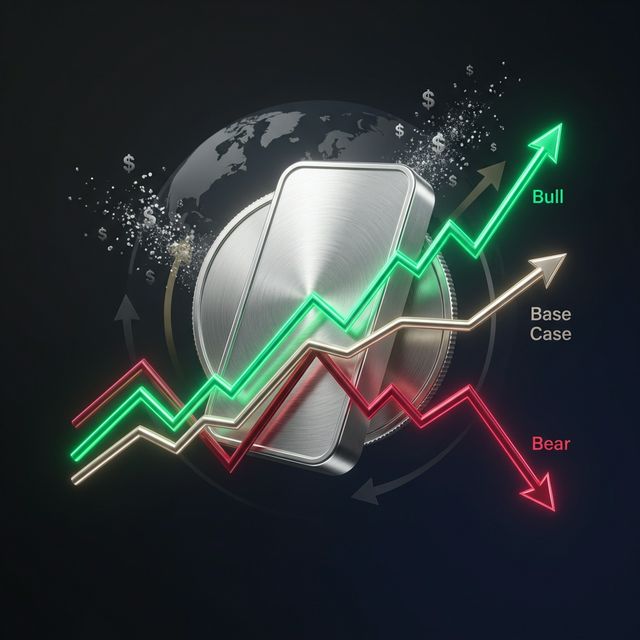
Scenario Analysis
Bull Case
The bull case for silver in 2026 does not depend on slogans about silver being “cheap.” It depends on alignment.
The constructive scenario looks like this:
- real yields trend lower
- the dollar weakens or at least stops tightening financial conditions
- industrial demand remains resilient
- investment flows stay positive
- the market remains tight enough that incremental buying has an outsized impact
In that environment, silver does not need mania to stay strong. It only needs enough additional demand to press on a market with limited spare liquidity and a credible structural deficit backdrop.
Under a true bull regime, silver behaves less like a lagging industrial metal and more like a high-beta precious metal with structural demand support underneath it. That is the setting in which it can revisit highs, exceed prior peaks, and outperform gold on a tactical basis.
But even in the bull case, the path is unlikely to be smooth. Silver rarely rallies in a clean line.
Bear Case
The bear case is stronger than many silver bulls admit.
Silver is exposed to two simultaneous pressures in a hostile regime. It can suffer as a precious metal when real yields stay high, and it can suffer as an industrial metal when growth slows. That is the core vulnerability of its dual identity.
A bearish 2026 regime would likely include some combination of:
- sticky inflation preventing meaningful easing
- higher-for-longer real rates
- a firm dollar
- weaker manufacturing or fabrication demand
- sustained ETF outflows or long liquidation
In that environment, silver can correct sharply even if the long-term structural story remains broadly intact. Good fundamentals do not immunize a market from drawdowns when positioning is crowded and macro conditions are wrong.
The central bear-case conclusion is simple: a positive long-term narrative does not guarantee a favorable 12-month trade.
Base Case
The base case is neither a collapse nor a clean continuation rally.
The most reasonable central scenario for 2026 is a structurally supported but tactically unstable market. In practice, that means silver may hold above older cycle norms, retain an upward bias over time, and still experience repeated violent pullbacks along the way.
This is the most defensible view because it respects both sides of the evidence.
The structural side remains credible: persistent deficits, solid industrial demand, and a market that has shown sensitivity to available supply. The tactical constraint is also real: silver remains highly dependent on macro conditions, real yields, the dollar, and investment flows.
So the base case is not “steady climb.” It is “supportive structure, unstable path.”
What Could Change This Outlook?
Macro and Market Invalidators
Several developments would materially weaken the constructive case.
The first is a sustained higher-for-longer rate regime. If inflation remains sticky and policy makers cannot ease meaningfully, silver loses one of its main macro supports.
The second is a broad demand disappointment in industrial end markets. Structural demand themes matter, but they do not override cyclical weakness forever. If manufacturing or fabrication demand softens more than expected, the deficit story may narrow faster than bulls assume.
The third is prolonged ETF outflows. In silver, financial flows often dominate the shorter-term price path. A persistent reversal in positioning can pressure the market even when the physical picture remains relatively tight.
The fourth is a larger-than-expected supply response. If mine output and recycling improve more aggressively than expected, urgency around tightness can fade.
Investor and Execution Risks
There is also a practical risk layer that matters for real portfolios.
Silver is more volatile than gold. Its market is smaller, thinner, and more prone to sharp sentiment-driven moves. That makes position sizing, entry timing, and risk control more important than the long-term thesis alone.
A valid strategic outlook does not automatically create a good tactical entry. Many retail investors confuse asset quality with trade quality. In silver, that mistake is expensive.
What Investors Should Actually Watch
A serious silver outlook should end with indicators, not slogans.
The variables that matter most are:
- real yields: the clearest macro pressure gauge
- the dollar index: critical for broader financial conditions
- ETF and ETP flows: the main tactical swing factor
- manufacturing and fabrication indicators: useful for testing the industrial demand story
- evidence of supply response: especially mine supply and recycling trends
- signs of physical tightness or easing: important for judging available liquidity rather than just headline inventory
These are more useful than social-media narratives, sensational price targets, or one-factor explanations.
Final View
The cleanest silver price forecast for 2026 is not a number. It is a regime call.
Silver still has a credible bullish long-term structure. Industrial demand remains important, supply remains constrained enough to matter, and investment flows can still produce outsized upside when macro conditions cooperate. But 2026 is unlikely to reward lazy conviction. Silver is too dependent on real yields, the dollar, and positioning for that.
The most defensible stance is constructive but conditional. The long-term thesis remains alive. The tactical path will be uneven, flow-driven, and highly sensitive to macro timing.
For investors, that means discipline matters more than theater.
FAQ
Is silver bullish in 2026?
Potentially, yes, but not unconditionally. A bullish outcome depends on supportive macro conditions, resilient industrial demand, and at least stable investment flows.
What is the biggest driver of silver in 2026?
The most important swing factor is likely the interaction between real yields, the dollar, and ETF flows. Industrial demand matters, but financial conditions often determine whether silver can fully express that strength in price.
Does industrial demand make silver safer than gold?
No. It makes silver different, not safer. Industrial demand gives silver structural support, but it also makes the metal more exposed to cyclical weakness.
Can silver outperform gold in 2026?
Yes, especially if financial conditions ease and investor inflows remain strong. In a tighter or more defensive macro regime, gold may hold up better because silver carries more cyclical risk.
What should investors watch most closely?
Real yields, the dollar, manufacturing demand, and ETF positioning. Those variables will tell you more than broad narratives about inflation or safe havens on their own.
Internal Link Suggestions
- Gold Price Forecast 2026: Real Rates, Central Banks, and Portfolio Hedging
- Silver vs Gold in 2026: Which Metal Has Better Risk-Adjusted Upside?
- How Silver ETF Flows Influence Spot Prices
- Why Silver Behaves Like Both an Industrial and Precious Metal
- What the Gold-Silver Ratio Still Tells Investors
Newsletter CTA
Subscribe for weekly analysis on silver, gold, ETF flows, real yields, and macro regime shifts—without theatrical price targets and without one-factor narratives.